
14 Dokumente gefunden
Microbial regulation of hexokinase 2 and its impact on inflammation
Das intestinale Mikrobiom spielt eine entscheidende Rolle bei der Regulation von Hexokinase 2. Diese regulatorische Interaktion erfolgt durch die Metabolite des Mikrobioms, insbesondere die kurzkettigen Fettsäuren. Acetat induziert die Expression von HK2 und trägt damit zu einem schwerwiegenderen Verlauf…
Deletion of the microbially regulated enzyme hexokinase 2 in intestinal epithelial cells protects from intestinal inflammation…
Upregulation of glycolytic enzymes as well as glycolysis in general has been observed in a plethora of immune cells and some non-immunological cells. In our study, we show upregulation of the glycolytic pace-maker enzyme Hexokinase 2 (HK2) in intestinal epithelial cells (IECs) upon intestinal inflammation…
Deletion of epithelial HKDC1 decelerates cellular proliferation and impairs mitochondrial function of tumorous epithelial…
A metabolic switch favoring glycolysis over aerobic oxidative phosphorylation, termed the “Warburg effect”, is a hallmark of cancer cells. Hexokinase (HK) catalyzes the first and irreversible step of glycolysis, thereby limiting overall glycolytic activity. Mammals encode five HK family members: HK1-4…
Hoboken, NJ: Wiley, 2025
Hexokinase 2 expression in apical enterocytes correlates with inflammation severity in patients with inflammatory bowel disease
Inflammation is characterized by a metabolic switch promoting glycolysis and lactate production. Hexokinases (HK) catalyze the first reaction of glycolysis and inhibition of epithelial HK2 protected from colitis in mice. HK2 expression has been described as elevated in patients with intestinal inflammation;…
London: Springer Science and Business Media LLC, 2024
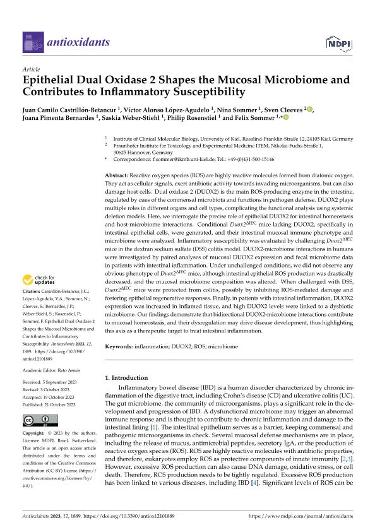
Epithelial Dual Oxidase 2 Shapes the Mucosal Microbiome and Contributes to Inflammatory Susceptibility
Reactive oxygen species (ROS) are highly reactive molecules formed from diatomic oxygen. They act as cellular signals, exert antibiotic activity towards invading microorganisms, but can also damage host cells. Dual oxidase 2 (DUOX2) is the main ROS-producing enzyme in the intestine, regulated by cues…
Basel: MDPI AG, 2023
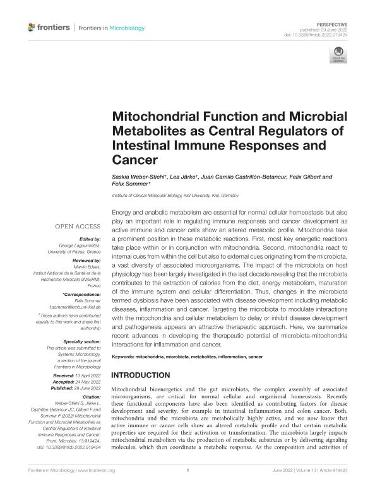
Mitochondrial Function and Microbial Metabolites as Central Regulators of Intestinal Immune Responses and Cancer
Energy and anabolic metabolism are essential for normal cellular homeostasis but also play an important role in regulating immune responses and cancer development as active immune and cancer cells show an altered metabolic profile. Mitochondria take a prominent position in these metabolic reactions.…
Lausanne: Frontiers Media SA, 2022
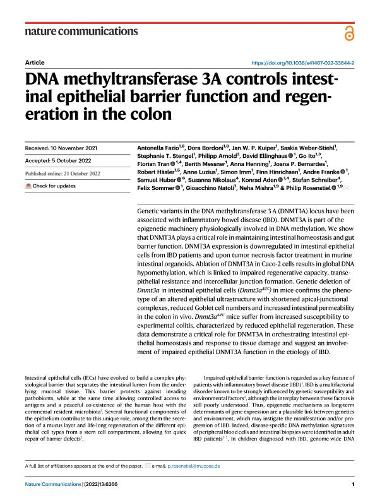
DNA methyltransferase 3A controls intestinal epithelial barrier function and regeneration in the colon
Genetic variants in the DNA methyltransferase 3 A (DNMT3A) locus have been associated with inflammatory bowel disease (IBD). DNMT3A is part of the epigenetic machinery physiologically involved in DNA methylation. We show that DNMT3A plays a critical role in maintaining intestinal homeostasis and gut…
[London]: Springer Science and Business Media LLC, 2022
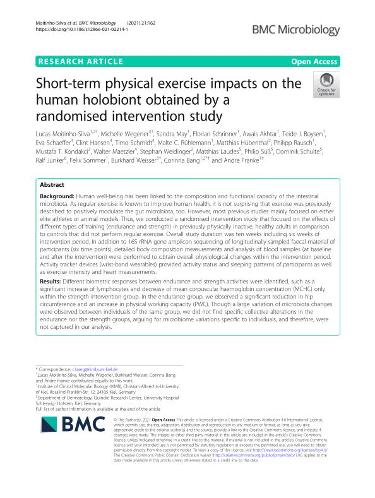
Short-term physical exercise impacts on the human holobiont obtained by a randomised intervention study
Background Human well-being has been linked to the composition and functional capacity of the intestinal microbiota. As regular exercise is known to improve human health, it is not surprising that exercise was previously described to positively modulate the gut microbiota, too. However, most previous…
London: Springer Science and Business Media LLC, 2021
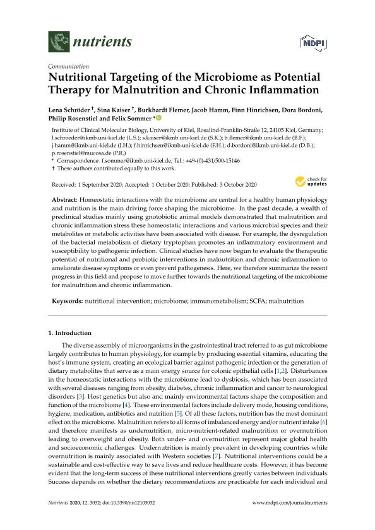
Nutritional Targeting of the Microbiome as Potential Therapy for Malnutrition and Chronic Inflammation
Homeostatic interactions with the microbiome are central for a healthy human physiology and nutrition is the main driving force shaping the microbiome. In the past decade, a wealth of preclinical studies mainly using gnotobiotic animal models demonstrated that malnutrition and chronic inflammation stress…
Basel: MDPI AG, 2020
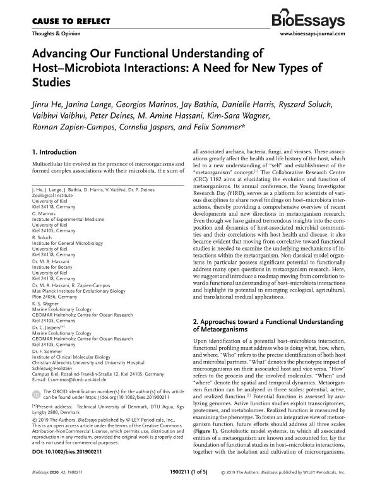
Advancing Our Functional Understanding of Host-Microbiota Interactions : A Need for New Types of Studies
Multicellular life evolved in the presence of microorganisms and formed complex associations with their microbiota, the sum of all associated archaea, bacteria, fungi, and viruses. These associations greatly affect the health and life history of the host, which led to a new understanding of “self” and…
Hoboken, NJ [u.a.]: Wiley, 2020
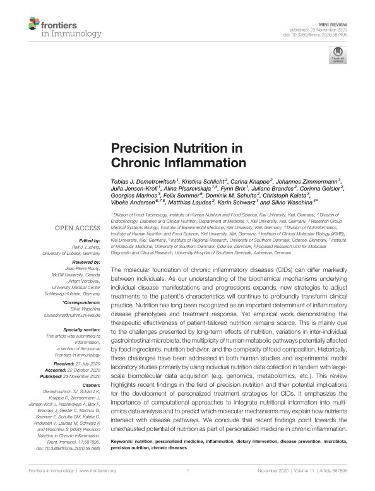
Precision Nutrition in Chronic Inflammation
The molecular foundation of chronic in fl ammatory diseases (CIDs) can differ markedly between individuals. As our understanding of the biochemical mechanisms underlying individual disease manifestations and progressions expands, new strategies to adjust treatments to the patient ’ s characteristics will…
Lausanne: Frontiers Media SA, 2020
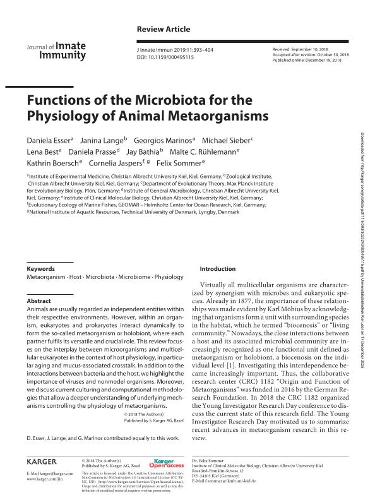
Functions of the Microbiota for the Physiology of Animal Metaorganisms
Animals are usually regarded as independent entities within their respective environments. However, within an organism, eukaryotes and prokaryotes interact dynamically to form the so-called metaorganism or holobiont, where each partner fulfils its versatile and crucial role. This review focuses on the…
Basel: S. Karger AG, 2019
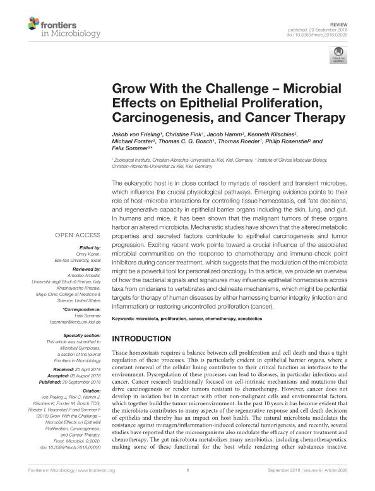
Grow With the Challenge - Microbial Effects on Epithelial Proliferation, Carcinogenesis, and Cancer Therapy
The eukaryotic host is in close contact to myriads of resident and transient microbes, which influence the crucial physiological pathways. Emerging evidence points to their role of host-microbe interactions for controlling tissue homeostasis, cell fate decisions, and regenerative capacity in epithelial…
Lausanne: Frontiers Media SA, 2018
Molecular analysis of self/non-self recognition in the hermaphroditic urochordate Ciona intestinalis
Die Fähigkeit der Selbst-/Nichtselbsterkennung ist eine fundamentale Eigenschaft aller vielzelligen Tiere, um potentielle Pathogene zu erkennen, die eigene genetische Integrität zu wahren und eine erfolgreiche Fortpflanzung hermaphroditer Organismen zu gewährleisten. Die molekularen Mechanismen dieser…